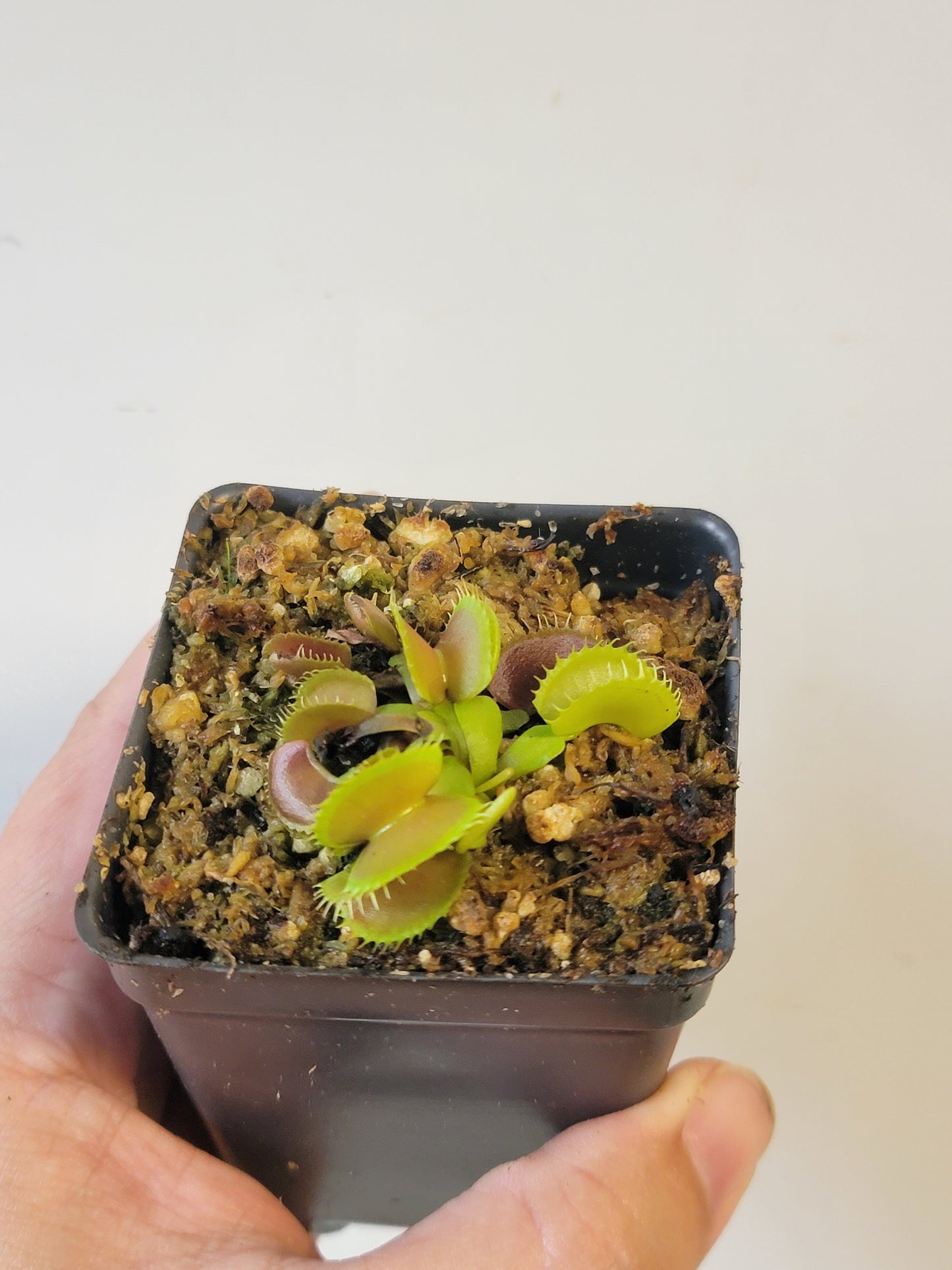
Where to Grow
Grow flytraps outdoors year round. We generally do not recommend growing them indoors, even in a terrarium under grow lights. Their light requirements are very high, and they also benefit from a cold dormancy period each year to stay healthy and thrive.
Light
Full sun (outdoors). Bright indoor lights are possible but not preferred.
Water
Use only purfied, distilled, rain, or reverse osmosis water. No tap water. Place the pot in a tray with 0.5 to 1 inch of water. In winter, decrease the amount of water in the tray and just keep the soil damp.
Soil
Use a 50:50 mix of sphagnum peat moss and coarse silica sand or perlite. Ensure all ingredients are free of fertilizers and minerals.
Containers
Plastic pots are best. Avoid unglazed terra cotta pots to prevent water wicking and mineral leaching. The pot should have holes in the bottom and should be sitting in a separate tray of water.
Feeding
When Venus Flytraps are outdoors, they typically catch enough insects during spring and summer to thrive. If you are growing them indoors, you can occasionally feed them larger insects such as houseflies, pill bugs, or spiders.
Fertilizing
Do not use any fertilizer. The insects the plants feed on are their natural source of fertilizer.
Humidity
Not a concern when growing outdoors above Zone 7 in the United States
Dormancy (Winter Care)
Dormant from October to March. Venus flytraps may look dead due to shorter daylight and colder temperatures. In the mid-Atlantic, overwinter outdoors with heavy mulch or in a cold frame, or place in an unheated garage with light. Another option is to refrigerate the unpotted plant, though less preferred. Keep soil damp, not wet. They can survive frosts and brief freezes.